It’s right there, sitting in your marketing funnel. All you need to do is identify it.
For the product setup, see Facebook ads integration.
Last year, a wellness brand we worked with set up campaigns on Meta ads targeting people interested in “back pain relief.” Their lead form asked for name, email, and a question: “What’s your main health concern?” But within a week, their ad account got flagged.
They did not know why.
But we identified PHI being sent to Meta without being filtered. And this violates HIPAA-Meta policy.
They were unknowingly collecting PHI (Protected Health Information), and Meta’s automated systems caught it.
This blog will guide you:
-
How can you identify PHI
-
What are the 18 PHI identifiers
-
Spot PHI in your marketing stack from lead forms to pixels
-
What’s safe to use and what’s not
-
And de-identification of PHI to run compliant, high-performing ads
Ready? Let’s break it down step-by-step.
Why PHI Matters for Healthcare Marketers
First, what is PHI?
PHI(Protected Health Information) isn’t just hospital jargon. If you work in health marketing, chances are you handle PHI more than you realize.
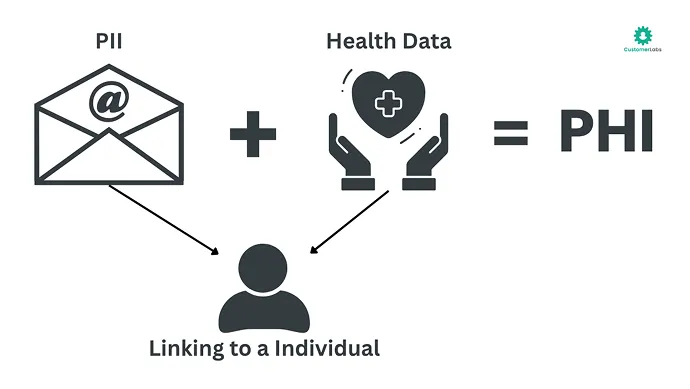
Here’s the simple formula to understand it:
PHI = [PII] + [Health Info] + [Linkage]
Note: The key is not just possession of the data but the linkage of it to an actual person.
It matters for healthcare marketers because you are violating Meta’s ads policy by sending in prohibited data. Mishandling PHI can lead to costly fines, ad account shutdowns, or legal action.
According to Meta’s core update, it is restricted from sending PHI or direct PII to Meta for ad optimization. So when you send PHI intentionally or unintentionally, Meta’s systems will recognize and disable your ad account under policy violation.
Considering these restrictions, as a healthcare marketer, you need to equip yourself to identify PHI.
Think about where PHI shows up in your marketing:
-
Lead forms asking about symptoms or conditions
-
CRM tags like “diabetes lead”
-
Email flows triggered by health interests
-
Pixels tracking condition-based events
If you’re an agency or freelancer, this applies to you too. PHI isn’t just the compliance team’s problem anymore; it’s yours.

Did you know that there are 18 HIPAA identifiers that you cannot cross?
If NO, then just scroll up.
The 18 HIPAA Identifiers That Make Data PHI
HIPAA lists 18 specific identifiers that, when combined with health info, make data “protected.” Watch out for these:
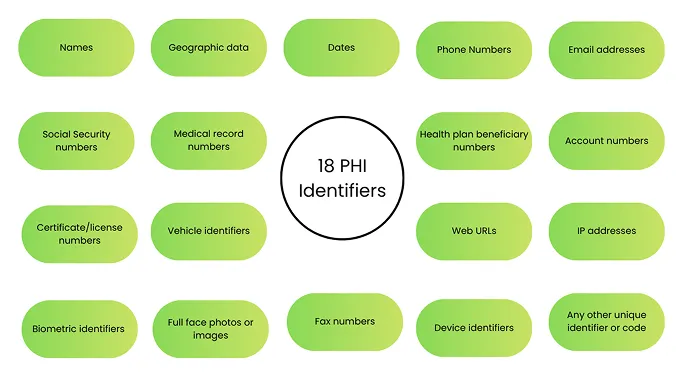
You would not have thought about this: ePHI. What?
PHI vs. ePHI
| PHI (Protected Health Information) | ePHI (Electronic Protected Health Information) |
|---|---|
| Any health-related data that can identify an individual | PHI that is created, stored, transmitted, or received in electronic form |
| Often handled by providers, call centers, or intake teams | Often handled by marketers, devs, and operations teams through lead forms, email flows, and backend integrations |
| Can exist on paper, spoken, or physical records | Exists in digital tools like web forms, cloud storage, email software, and data sync platforms |
| Examples: Name + medical condition, appointment info, prescriptions | Examples: Form submissions, CRM entries, email campaigns, Google Sheets with user health info |
As a marketer, if you’re building forms, running email campaigns, or syncing data, you’re handling ePHI. It’s not just a tech team issue.
What Data Isn’t PHI?
Not all data in a healthcare or wellness context is considered PHI, and that matters for marketers.
To qualify as PHI under HIPAA, data must be both:
-
Individually identifiable, and
-
Linked to a person’s health condition, care, or payment for care
If it doesn’t meet both criteria, it’s not PHI, meaning HIPAA restrictions don’t apply.
Here are common examples of data that aren’t considered PHI:
| Data Type | Why It’s Not PHI |
|---|---|
| Anonymous website traffic data | No identifiers or health info = not tied to an individual |
| Ad click or page view activity | As long as it’s not linked to health conditions or identifiers |
| Aggregated campaign performance | Group-level metrics without personal health info don’t qualify |
| Non-health-related lead data | Example: Someone downloads a general wellness eBook without entering PHI |
| Year-only timestamps | “2025” by itself isn’t identifiable under HIPAA, but “July 28, 2025” would be |
| Zip codes from large regions | ZIP codes covering more than 20,000 people can be used safely in de-identified data |
In short: Context matters. Data becomes PHI only when it connects a person to their health. Strip the identifiers and remove the health context? You’re outside HIPAA’s scope.
Heads up: Let’s dig your marketing funnel where PHI is hiding.
6 Risk Zones Where PHI Can Leak in Marketing
1. Email Campaigns: When Personal Touch Gets Too Personal
Examples:
-
Subject line: “Sarah, your diabetes plan is ready”
-
Email lists named “weight loss leads”
-
Automated emails based on health quiz answers
**Why it’s risky:
**When you collect names or emails that are combined with health-related content and send these events to Meta, it becomes a PHI violation. That’s protected under HIPAA and Meta’s health ad policies.
2. Lead Forms & Landing Pages: Small Questions, Big Risks
Examples:
-
Asking “What symptoms are you facing?”
-
URLs like /backpain-plan?name=sam
-
Pixels or tools capturing everything typed in the form
Why it’s risky: Pixel captures all this data and shares health info + their identity, even without realizing it. This will lead to ad account restrictions
The Pixel captures the page URL - which may contain health terms like /pcos-meal-plan?name=sarah and form field data (name, email, symptoms), especially if the Pixel isn’t configured safely.
Even if you never meant to send PHI, it’s happening invisibly. And when Meta detects it, ad accounts get restricted or flagged for policy violations.
3. CRMs & Segments: Helpful Labels Can Hurt You
Examples:
-
Tags like “asthma-interest” or “PCOS-lead” in your CRM
-
Sending those leads to Meta or analytics tools
-
Sharing tagged segments with third-party platforms
Why it’s risky: You’re now passing health context and identity to an ad platform-a classic HIPAA violation. Even if it’s just for internal targeting, if that data ever touches an external ad or analytics tool, you’ve exposed PHI.
It’s not about malicious intent; it’s about how unnoticed syncing opens the backdoor to PHI leakage.
4. SMS & WhatsApp: Private Messages, Public Trouble
Examples:
-
“Hi Priya, your thyroid report is ready.” on WhatsApp
-
Links with health terms and email IDs in the URL
Why it’s risky:
The text message includes health context (like “thyroid report” or “PCOS plan”). personal identifiers (name, email, phone). It is tracked using UTMs and pixels. If those links are tracked or shared with platforms like Meta, it’s a clear compliance violation.
That’s why WhatsApp campaigns are riskier than they seem, even if the message feels private.
5. Ad Platforms (Meta & Google): Data Traps You Don’t See
Examples:
-
Pixel tracking visits to health pages
-
Uploading custom audiences based on health data
-
Sending “offline conversions” like “consult booked for PCOS”
Why it’s risky: Even without saying “health” directly, these signals reveal user intent and identity tied to medical context. Platforms like Meta prohibit health-related audience creation, and event names like “PCOD_lead” or “mental_health_click” can get flagged.
You might think you’re optimizing, but you’re feeding PHI into systems that aren’t allowed to process it.
That’s how accounts get restricted or permanently banned.
6. Website Behavior Tracking: The Hidden PHI Collector
Examples:
-
Session replays showing form inputs with names + health info
-
Heatmaps tied to logged-in users
-
Cookies store quiz results
Why it’s risky: Even if it’s not shared externally, you’re now storing identity + health context together, which legally qualifies as PHI.
That means tools meant for behavior analysis are handling sensitive data, and most of them aren’t built to store PHI compliantly.
One quiet session replay could become a major compliance issue if breached.

How to De-Identify Data & Stay HIPAA-Compliant
There are two HIPAA-approved ways to de-identify data: the Safe Harbor Method and the Expert Determination
-
**Safe Harbor Method
**Remove or generalize all 18 HIPAA identifiers, no names, emails, IPs, zip codes, or condition references. Once stripped, the data isn’t PHI.
Eg:- Remove emails or phone numbers before syncing leads to ad platforms.
- Scrub health terms from URLs to avoid condition-based inferences.
- Rename pixel events to remove health conditions.
-
Expert Determination A privacy expert reviews your data and confirms the risk of re-identification is very low. Useful for complex data sets.

A secret spill, a 2-in-1 solution: There is another way, where your data is hashed, but you don’t need an expert, no matter how complex your data can be.
The Easy Method: Using 1PD Ops to De-identify PHI
Ad platforms are tightening restrictions, but you can stay compliant and keep results strong with 1PD Ops (First-Party Data Ops). Here’s how:
Mask PHI Before Data Leaves Your Site
Scraping health terms from URLs and blocking form data sounds technical, but it’s where most accidental PHI leaks begin. Platforms like Meta read your page URLs and event payloads so if “/thyroid-plan?email=sara@gmail.com” slips through, your account’s at risk. 1PD Ops sanitizes that data before it’s ever shared, so you don’t get flagged for something you didn’t even realize you were sending.
Use Clear Event Names
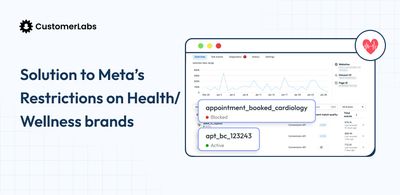
Meta doesn’t like event names like PCOD_lead or appointment_diabetes, and it will throttle (or block) your campaigns if it sees them. With 1PD Ops, you can swap those out for clean, neutral labels-APT-1024, form_submit, stage3_conversion without losing tracking fidelity. Same insights, no PHI footprint.
Replace PII with Anonymous IDs
Passing emails or phone numbers to ad platforms is the fastest way to trigger a HIPAA violation. Instead, 1PD Ops uses hashed IDs to track behavior while keeping real identities out of the equation. You still get attribution and optimization, just minus the legal headache.
Clean and Control Meta CAPI Payloads
Meta’s CAPI is powerful but dangerous if you don’t control what you’re sending. If your payload includes health terms, emails, or diagnostic hints, your account could get flagged or even banned. 1PD Ops gives you total control: pass only high-intent, stripped-down event data that performs without crossing compliance lines.
Build Targetable Segments with Behavioral Data
You don’t need health info to build smart retargeting. Instead of creating audiences based on “PCOS_leads” or quiz results, 1PD Ops lets you segment based on actions—like “visited 3+ pages” or “clicked CTA twice.” You get intent-rich signals that are safe, scalable, and 100% HIPAA-compliant.
Result: Compliant data flows, protected ad accounts, and better ROAS.
For a detailed guide on the above steps, click here
Wrap-Up: Market Responsibly in the Age of PHI
PHI isn’t a roadblock; it’s your responsibility. Protect user privacy and drive performance without compromise.
If you’re running healthcare campaigns on platforms like Meta, HIPAA compliance isn’t optional; it’s non-negotiable. PHI doesn’t just show up in obvious places like forms or EMRs.
It hides in click IDs, page views, UTM parameters, and yes, even pixel events. That means every ad impression, retargeting sequence, and server-side event could be a liability if you’re not actively de-identifying your data.
Here’s the good news: you can stay compliant and drive results. De-identify data before it leaves your site. Map events responsibly and lean on tools like 1PD Ops to build Meta-ready, HIPAA-aligned funnels without the guesswork.
Don’t wait for a policy violation to force your hand; future-proof your funnel today.